Showing posts with label Ghana in Retrospect. Show all posts

Sunday, May 10, 2020

HOW TO EARN INCOME ONLINE AS A FREELANCE WRITER


Has your business been affected by the COVID-19 Pandemic? Are you interested in working from home? We have good news for you!

HLT PUBLISHERS is proud to present Anthony Obeng Afrane.  He is the General Secretary of the Ghana Association of Writers (GAW). Mr Afrane is an excellent linguist.  He is a very multi talented well known Ghanaian author; a fabutastic writer and a man with integrity, honesty and transparency. 

Anthony Obeng Afrane is the author of 12 published titles, such as THE SAGA OF A POLITICAL GURU, many articles and the series of historical works of GHANA IN RETROSPECT 


Many magazines across the world are seriously in need of fresh ideas and stories, and are ready pay good money for your story? Guideposts for example pays a whopping US $250 for a 1,500-word story.

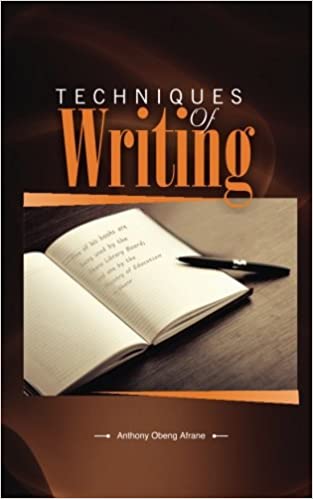
However, there is the need for you to hone your writing skills to be able to take advantage of this opportunity. “Techniques of Writing” by Anthony Obeng Afrane will provide you with a cutting-edge guide to help you to accomplish that dream of earning income from your writing.

The following excerpts from the book will be of interest:

Word Choice or Diction
Word choice is an important part of writing which defines the style of a writer. Like the goldsmith who has the skills to mold jewelry into any form or shape, every good writer is a wordsmith who is capable of juggling words.

It is essential that you choose words that capture meaningful and exciting imagery to your readers. The story is told of how speechwriters of a former US president, John F. Kennedy laboured all night in deciding between using “enemy” and “foe” when drafting his 20th January, 1961 inaugural speech. The speechwriters wanted to use a less harsh word to describe those who did not like America. And after a very long brainstorming session, which lasted several hours, they settled on “foe”. Their decision was based on the fact that even though both words refer to a person who hates or opposes someone or something, an “enemy” does it actively with much venom.

Telling versus showing
Let your words show instead of telling. Example of words that tell: “Ama was blind.” Example of words that show: “Ama felt for the chair with a white cane and sat down.”
Instead of telling that your character is angry, show it as follows: “He frowned, raised his voice and slammed his fist on the table.”

Ambiguity
Avoid ambiguity,  that is using phrases or statements which contain more than one meaning.  Example, “Call me a taxi” could mean “Find me a taxi” or “Call me by the name taxi.”

Terminal Punctuation
There are three terminal punctuation marks. They are: full stop, question mark and exclamation mark. They indicate the end of a sentence, so sentences after these marks must begin with a capital letter.

Friends, I want to urge you to make the best out of a worst situation by taking the first step.  Order a copy of “Techniques of Writing” now! 

PRICE: GHC30 (INCLUDING DELIVERY BY EMS) ALSO AVAILABLE AT AMAZON.

IN ADDITION TO RECEIVING HELPFUL TOOLS, YOU WILL BE GIVEN A LIST OF POTENTIAL MAGAZINES WHO WILL BUY YOUR STORY. 

I WISH YOU ALL THE BEST. " ~ Anthony


Interested in bump starting your writing career? Contact Mr, Afrane today!

Call or whatsapp at:   0243703472 
E-mail: anthonyafrane54@gmail.com


Thursday, October 19, 2017

GHANA IN RETROSPECT PART ELEVEN: Ghana under Hilla Limann


 Hilla Limann: September 24, 1979 – December 31, 1981

As President, Dr. Limann stated that "agriculture will be our first priority now, and the foreseeable future. It is unacceptable that the country which abounds in arable land should import food or else go hungry’. A two year agricultural programme was thus launched. Farmers were given incentives in the form of fair producer prices and where necessary, machinery and expertise. Food became available on the market, putting back the smiles on the faces of many Ghanaians as queues for food disappeared within a year of taking power. The government also undertook to encourage the development of local cottage industries, hoping that they would eventually counteract the trend towards capital-intensive import-substitution plants. And to show its continued commitment towards the sector, the 1981/82 budget made available a total of C283.6 million. Out of this amount, the Ministry of Agriculture and its departments were allocated C217.2 million. The Irrigation Development Authority received C43.12 million to cover land development in areas surrounding existing irrigation schemes like Vea and Tono. The Cotton and Bast Fibre Development Boards were given C7 million and C55 million for the importation of fertilizers. On crop development, an amount of C88.6 million was earmarked whilst the cocoa sector had C33.9 million.

Next, the administration tackled the problem of shortages of essential commodities which was partly the result of the AFRC’s sale of all available stocks. Resources were thus mobilised and within two to three months not only did the country experience improvement in stocks, but several ships were docked, waiting at the Tema Harbour to discharge their cargo, which was mostly made up of essential commodities.

Over twenty articulated trucks also brought goods from Nigeria to add to stocks. By the end of the first year in office, the shelves were almost filled to capacity. Focus was placed on revamping the mining sector. A major campaign of reviving the gold industry was therefore initiated and financial backing sought from foreign investors. In this connection, a three-day international seminar and exhibition on Ghana’s Gold Endowment was opened at the Kwame Nkrumah Conference Centre, Accra, on January 6, 1981. The seminar, which attracted investors from countries including the US, Britain and Canada no doubt opened up the mining sector for investment. Moreover, the government introduced a new Investment Code and enacted the Trade Liberalization Act to help attract greater doses of foreign capital.

The government of Dr. Hilla Liman adopted a new industrial policy. Factories received government backing to import spare parts to rehabilitate broken down machinery so as to fully utilise their installed capacities. A call was made for more reliance on local inputs in industrial production. Local cottage industries were particularly encouraged. 

Again, to improve relations with the international community and to undo the blockage against the country due to the AFRC’s excesses, more especially its human right abuses, Limann travelled throughout Western Europe, Africa and parts of the Far East not only to renew ties, but also to search for funds to improve the country’s economy. This yielded positive results as Nigeria, for instance, did resume oil deliveries to Ghana and presented the country with a $500,000 grant. Other countries also made pledges to help revive the economy.

The government also relieved the country of her acute transportation problems by the importation of Tata buses from India. These buses started inter-city operations to the relieve of the travelling public. The rural areas which produce the bulk of the country’s food requirements were not left out as some of the new buses were put on their roads. Road rehabilitation projects were also started. Limann also upheld freedom of speech and of the press. Fundamental human rights were on the whole, respected as people expressed their opinions openly without the fear of harassment at the hands of security agents or of being imprisoned under very suspicious circumstances. 

Failures/problems Faced by the Limann Administration:

A major problem was how the PNP could continue the "house cleaning" exercise started by the AFRC to uproot bribery and corruption from the Ghanaian society. As the government found itself in a different political setting (constitutional administration), it became difficult for the PNP to carry out the instant justice (e.g. flogging, confiscation of goods or assets etc.), which the past military regime carried out with no checks. Therefore, as corruption and other malpractices started rolling back into the system, people started criticizing the administration and accused it of not being up to the enormous task ahead of the country.

The country was also beset with difficulties in the cocoa industry. With the world price fixed at £1,200 a ton (by June 1980) the government had no alternative than to pay lower prices to farmers who were not the least happy about this development. Worse was to follow when smuggling of cocoa across the country’s borders to neighbouring countries for higher prices became the order of the day. Export earnings from cocoa, the mainstay of the economy therefore dwindled. And with total debt on the increase, reaching over $1.4 billion in 1981 whilst $400 million stood in arrears on short-term debt repayments, the economy started showing negative signs.

 In 1981, inflation averaged 116.5 per cent with an estimated BOP deficit of $1.5 million, or 30 percent of Gross National Product (GNP). Halfway through the 1981 fiscal year, the government had overspent the budget by C5 billion (although the planned deficit for the entire year was C4.5 billion). The economic situation at this time showed no signs of improvement and labour unrest became rampant throughout the country with the biggest being a TUC backed work stoppage by mid 1981.

Moreover, Limann was surrounded by CPP old-guards such as Nana Okutwer Bekoe, Kojo Botsio, Kofi Batsa and Dr. Ayeh-Kumi who were eager to have a stake in the administration of the country as a reward for their investment in Limann’s election. Therefore, not only was Limann handicapped by not having the freedom to operate as an Executive President, but worse still, there was power struggle in the party, especially, on the death of Imoru Egala, the party Chairman.

Instead of paying attention to the country’s problems, the PNP was wasting precious time on leadership struggle. In fact, when the issue of the PNP’s leadership crisis was brought to the courts in December 1981; the ruling coalition was no longer capable of inspiring confidence even amongst its most avid supporters. Furthermore, not only were the actions of the AFRC challenged in courts, but aggrieved AFRC convicts and those with properties confiscated to the state started to petition the PNP administration for a review of their cases.

This put the government in a serious dilemma as it was widely believed that there had been miscarriage of justice during the AFRC rule and therefore there was the urgent need for a second look at some of its actions. The administration was also haunted by the continued popularity of Rawlings, who did not help matters by assuming the role of an unofficial watchdog of the regime and making statements with political undertones to the press.

In the latter part of 1980 and 1981, the administration began to employ fairly heavy-handed tactics in its renewed efforts to deal with groups which were not inclined towards it. The first target of government reprisals was the outspoken press. Despite the detailed Constitutional provisions for press freedom, and the creation of the Press Commission, the government was unable to tolerate constant criticism in the print media. Clumsy efforts to replace editors not amenable to government overtures (most notably Elizabeth Ohene of the Daily Graphic) did little to improve the PNP’s image in the public eye.

Another action which dented the image of the government was the retirement from the army of Brigadiers J. Arnold Quainoo, (AC) and Nunoo Mensah (CDS) - all key AFRC appointees, and other officers who were known admirers of Rawlings. The IGP, CO. Lamptey, suffered the same fate. The administration was also faced with corruption in high places. The PNP government was accused of taking a bribe of $2.4 million in a currency printing contract. Also, two top members of the party, Nana Okutwer Bekoe and Krobo Edusei were said to have taken a bribe of $1 million from an Italian businessman, Chiavelli, for investment favours.

There was also the issue of brain drain. The situation, which was the result of poor economic performance made the country lose a number of its manpower resources. With reports of perceived corruption in high places, the continued suffering of the average Ghanaian worker as the cost of a poor persons breakfast was double the minimum wage and Limann’s inability to exercise a firm control over the affairs of the country and his party (due to lack of personal power base of his own within the PNP) coupled with further deterioration in the economy, the PNP government was toppled in a coup d’ etat led by Flt. J.J. Rawlings on December 31, 1981. Thus Ghana’s third attempt at constitutional government came to an abrupt end. The Provisional National Defence Council (PNDC) was formed with Flt. J. J. Rawlings as Head of State and Chairman.

Anthony Obeng Afrane
anthonyafrane54@gmail.com
Writer Social Entrepreneur, Politician 
General Secretary of Ghana        Writers Asociation (GAW)

Author of ten published titles including: 
THE SAGA OF A POLITICAL GURU 
TECHNIQUES OF WRITING 
BOTH AVAILABLE AT AMAZON UK (click on titles to review and purchase)


GHANA IN RETROSPECT 10
GHANA IN RETROSPECT  9

Sunday, October 8, 2017

GHANA IN RETROSPECT PART TEN: THE ARMED FORCES REVOLUTIONARY COUNCIL


AFRC JUNE 4, 1979 - SEPTEMBER 24, 1979

The demise of SMC II saw a new military junta: The Armed Forces Revolutionary Council - AFRC, on the Ghanaian political scene. Rawlings became the Chairman with Major Boakye Gyan as the Spokesman. Other members were Major Mensah Poku, Major Mensah Gbedemah, Warrant Officer Class II Obeng, Private Owusu Adu, Corporal Owusu Boateng, Staff Sergeant Alex Adjei, leading Aircraftman Gatsiko, Lance Corporal Sarkodee Addo, Lance-Corporal Peter Tasiri, Lance-Corporal Ansah-Atiemo and Corporal Sheikh Tetteh. General Hamidu was named as the Liaison Officer between the AFRC and the government bureaucracy.

The AFRC declared that the coup d’etat was not to stop the return to civilian rule but to clear up the mess created by the previous regimes. As pointed out by Rawlings in a Radio and TV broadcast on June 30, 1979, "The action represented a revolt of the ordinary Ghanaian against social injustice, against economic hardship and against the cancer of corruption that had eaten deep into the fabric of our society". They were to ensure that the "gap between the haves and have-nots, the rich and poor is bridged". 

As an explanation for the country’s economic and social woes during a meeting with staff, workers and students of the University of Science and Technology on July 6, 1979, Rawlings identified lack of moral courage to challenge leaders with dubious character and hoped that Ghanaians would gather courage to show "red cards" to future politicians who would indulge in dirty tricks to plunge the economy into further mess.

Rawlings thus openly advocated a "house cleaning" operation that would erase all manifestations of corruption, profiteering or malfeasance associated in any way with previous governments. Second, he wished to bring about a moral turn-about, to reinstitute a norm of public accountability, and awaken the masses to their rights and responsibilities.

As a first step in the "house-cleaning" exercise, Mr. I. K. Acheampong and Major General E. K. Utuka were executed at the Teshie military range on June 16, 1979 after a hastily assembled revolutionary court. Ten days later, (June 26) the death sentence on General F. W. K. Akuffo, Lt. General A. A. Afrifa (ex-Head of State and Chairman of the NLC), Major-General R.E.A. Kotei, Air Vice-Marshall George Yaw Boakye, Real Admiral J.K. Amedume, and Colonel R. J. A. Felli was pronounced and implemented. They had apparently been found guilty by a People’s Court for offences under AFRCD 3 1979 Section 3(1) sub-sections (a) to (e). 

After these executions, the whole country was subjected to a state of terror as the organised violence in the military camps spilled over into the civilian sector. The administration of justice was instant and at times brutal. Women arrested for selling commodities above the control price were stripped naked and whipped in the open. Many Lebanese, Syrian and Indian businessmen, who had always been alleged to be part of the corruption spree were rounded up at random and brutalized, some had their houses looted. 

Summary dismissal of public servants, confiscation of assets and property were applied as a means of stamping out corruption and other malpractices which crippled the country’s economy. Alarmed by the excesses, the Ghana Bar Association demanded an open trial for those accused under AFRCD 3. Section 3(1) sub-sections (a) to (e). 

Leaders of political parties, the Christian Council of Ghana, the National Catholic Secretariat and the Ghana Assembly of Women appealed for justice to be tampered with mercy. But many ordinary people, workers and especially students from the universities demanded - "Let the blood flow". For instance on July 2, 1979, students of UST paraded the principal streets of Kumasi in support of the "secret trials" and the executions. Students of the University of Ghana also demonstrated their support with a march on July 3, 1979. Some held placards reading "Kill them all". Even the Christian paper, the Catholic Standard in its editorial of June 24, 1979 captioned "The Great Lesson", supported the executions.

People’s Revolutionary Courts thus continued to try and impose heavy sentences on people found guilty of ‘doing an act with intent to sabotage the economy of Ghana’ and other charges. Among those jailed were J.W.K. Harlley, former IGP and member of the NLC (25 years), E.O. Boakye (alias Boakye mattress, businessman) - 25 years, Ernest Ako, former IGP (25 years), B.S.K. Kwakye, former IGP (25 years) and E.K.. Owusu of Kowus Motors (25 years). 

Others were U.K. Yemoh (alias Kojo Sardine, businessman) - 20 years, Squadron Leader George Tagoe, Squadron Leader Abebrese, Col. Ahlijah, Group Captain Jackson and Col. Amevor, were jailed 20 years each. 

On July 4, 1979, the Inspector General of Police, C.O. Lamptey announced that 36 senior police officers were to proceed on compulsory leave as part of the "cleaning up exercise". They were accused of "straight forward" cases of stealing, hoarding, profiteering, amassing illegal wealth and acting as frontmen for women and other business concerns in the procurement of essential commodities. Some of them, the announcement continued, had indulged in various acts of gross dishonesty "as far as morals are concerned." Colonel P.H.S. Yarney was to refund to the state, immediately, an amount of £7,433.00 (C14,940,33) approved by the NRC as Special Advance to enable him wind up his duty in London and assume duty in Ghana as Commissioner for information. Tax evaders were given deadlines to settle their tax obligations "or face revolutionary action". 

Within months, the AFRC had recovered millions of cedis (C23,954,536.00) in tax arrears which were paid into AFRC Account Number 48 at the Burma Camp branch of the Ghana Commercial Bank. The government also took over private companies which were found to have indulged in economic sabotage including tax evasion. Among them was Tata Brewery. The Makola Number 1 market, which was considered the citadel of kalabule, was demolished on Saturday, August 18, 1979.

On July 11, 1979 the AFRC directed all top management personnel of state corporations and enterprises to declare their assets by July 17, 1979. And in a government White Paper issued on September 12, 1979 the Cocoa Marketing Board was dissolved with its Board of Directors to be replaced by a Cocoa Council. The Ministry of Cocoa Affairs was also abolished and its personnel redeployed. As a relief to the working class, the AFRC ordered landlords to reduce rents by 50 percent. ’ Landlords were to seek approval from the government before ejection. Cocoa farmers were not left out in this exercise as the producer price of cocoa was increased from C80.00 to C120.00 to revamp the industry. The inefficiency of government departments came under focus. For instance, the Ghana Highways Authority and the Cape Coast District Council were given three days to fill the pot holes in the streets of Cape Coast. Also, the Chief Justice was given the power to suspend the salaries of judges and magistrates who failed to deliver judgments within the prescribed time limits. 

Civil servants and the working class in general were advised about their attitude to work. They were not only to report to work on time but must be seen behind their tables attending to their schedules. Despite the successes of the AFRC in its bid to ensure social justice and to rid the country of corrupt practices, it went to extremes with serious consequences. 

The execution of the three former Heads of State and other top brass of the army led to international outcry and condemnation. These actions caused loss of confidence among overseas investors. The IMF and other sources of investment and aid dried up. Moreover, in protest against the political executions, foreign suppliers started an informal economic embargo, inducing further food and crude oil shortages. 

For example, a Japanese shipment of canned fish mysteriously never arrived. And an oil tanker from Nigeria entered the Tema Harbour, turned around and steamed back to Nigeria as news of Akuffo’s execution was announced; Ghana’s credit period for Nigerian oil was cut back from ninety (90) to thirty (30) days and immediate payment for outstanding bills was demanded.

 It needs to be emphasised that these reactions attracted sharp condemnation from Ghanaians, especially university students. In their demonstration on July 3 in support of the AFRC, some of the students held placards some of which read: 'Hands off Ghana’, ’Expose the British hypocrisy’, ‘Shut up Nigeria’, ‘keep your oil, we’ll burn wood’, ’Obasanjo, who are you?’. 

As the regime was not able to keep all the soldiers under control, some of them went about not only maltreating law abiding citizens for no apparent reasons, but shot and killed defenseless Ghanaians for alleged offenses which otherwise would have attracted no punishment in any well constituted law court. For instance, at Agona Swedru, one Mr. Asante, a businessman, was shot and killed by a trigger happy soldier for alleged hoarding of cement. Mr. Asante however had a building project in progress. And at Gomoa Abaasa near Agona Swedru, a woman was shot dead for allegedly hoarding two half- pieces of GTP wax print.

The result of the indiscriminate sale of existing stock of commodities at “control prices”, led to empty stalls. Farmers also refused to bring their food to urban centres for sale for fear of their produce being seized by soldiers to be sold at confiscatory rates. 

The result of these reckless acts was that prices of essential commodities and foodstuffs increased astronomically which was beyond the means of the ordinary Ghanaian. Though Rawlings became an instant hero for his patriotism, courage and dislike for injustice, Ghanaians were not enthused about the country experiencing another long period of military rule and therefore the AFRC had to abide by its own promise of going back to the barracks on October, 1, 1979. For these reasons, the elections which had been slated for June 18, 1979 were duly held. 

Of the nearly two dozen parties (19 in all) that were launched after the ban on party activity was lifted, six survived a series of mergers and realignments to contest the elections. They were: the People’s National Party (PNP) headed by Hilla Limann, the Popular Front Party (PFP) led by Victor Owusu, the United National Convention (UNC), under the leadership of William Ofori Atta, and the Action Congress Party (ACP) with Colonel (Rtd.) Frank George Barnasko as its head. Others were the Third Force Party (TFP) and the Social Democratic Front (SDF) led by John Bilson and Ibrahim Mahama respectively. 

Besides these leaders, other four candidates - R.P. Baffour, Imoru Ayarna, Kwame Nyanteh and Diamond Mark Addy - contested the post of president as independent candidates. 

When tallied, the parliamentary votes showed a clear majority for the PNP, which secured 71 out of the 140 contested seats. Hilla Limann, the PNP presidential candidate, together with his running mate, J. W. de Graft Johnson, polled 630,034 votes representing 35.51 per cent of votes cast, as opposed to the Victor Owusu- Tolon Na, Yacobu Tali slate of 526,249 votes or 29.66% of votes cast. 

Though the PNP won the majority in the parliamentary elections, its candidate failed to poll 50% (plus one) of votes cast as required by law to have outright victory and therefore another balloting had to be organised between the two leading contestants, namely, Hilla Limann and Victor Owusu. In the second round of the presidential election held on 9 July, 1979, Hilla Limann polled 1,118,305, i.e 61.98% as against Victor Owusu’s 686,097, i.e 39.2 per cent. On September 24, 1979, the AFRC handed over power to Dr. Hilla Limann.


Anthony Obeng Afrane
anthonyafrane54@gmail.com
Writer Social Entrepreneur, Politician 
General Secretary of Ghana        Writers Asociation (GAW)

Author of ten published titles including 
THE AGE OF A POLITICAL GURU


Sunday, October 1, 2017

GHANA IN RETROSPECT PART NINE: GENERAL AKUFFO AND THE SMC II


JULY 5, 1978 - JUNE 4, 1979

The exit of Acheampong led to the reconstitution of the Supreme Military Council with General Akuffo as Head of State and Chairman. He was sworn into office on July 6, 1978 by the Chief Justice, Justice F. K. Apaloo. Akuffo accused Acheampong of having divided the country in running a "one man show" government by taking actions without consulting other members of the SMC 1, and that his continued presence in office would impede any steps towards reconciliation. As a first step in streamlining the administration of the state, more than half of the members of SMC 1 including the IGP, J. H. Cobbina, were retired and new officers appointed to replace them. Several other serving officers who served as Commissioners in the regional ministries and institutions were recalled to barracks and their places taken over by civilians.

For instance Mrs. Gloria Amon Nikoi, Senior Principal Secretary of the Ministry of Foreign Affairs, took over from Col. R.J.A. Felli as Commissioner for Foreign Affairs. Mr. K. Afreh also took over from Colonel Parker Yarney. As Commissioner for Information; Anthony K. Woode replaced Commander G.E. Osei. As Commissioner for Greater Accra, Dr. K. G. Erbynn took over from Colonel W. A. Thompson. Evans-Anfom was made Commissioner for Central Region. Also affected in this exercise were Commander J. C. Addo, Chief Executive of the Cocoa Marketing Board and Major S. B. Gyasi, Executive Director of the Produce Buying Company. Commander Addo’s position was taken over by Kwame Asare Pianim whilst W. R. Koranteng, Managing Director of the Cocoa Marketing Company was made the First Deputy Chief Executive.

On May 1, 1979, the government came out with a form of "punishment" for General Acheampong. By a decree - Armed Forces Miscellaneous Provisions Decree, 1979 - the SMC II divested General Acheampong of all honours acquired by him during his tenure of office. He was to forfeit the use of any military rank and was prohibited from entering any military installation or establishment. He was to restrict his movements to his home town, Trabuom, in the Ashanti Region.

The SMC II took measures to dismantle the satellite organisations that formed the base of Acheampong’s political support. Therefore, "the Patriots", "Organisers Council", "The Friends", and "Ghana Youngsters Club" were banned and their assets frozen. The assets and bank accounts of former "Special Aides" to Acheampong: S. O. Lamptey, Kwesi Ghapson, Sam Boateng, S. K. Danso and Ben Kuma were also frozen.

Even though on July 31, 1978, the SMC II proposed to return Ghana to civilian rule with a "Transitional (Interim) National Government", having no institutional representation of the Armed Forces and the Police, it would have the mandate to rule for a period of not less than four years. However, intense pressure forced the SMC II to change this idea on November 30, 1978. The University Teachers’ Association of Ghana - UTAG, for instance, called on the government to produce a permanent constitution "reflecting, the mood of the nation for freedom of association and expression", the National Union of Ghana Students - NUGS also added its voice to this call and reiterated the need for general elections by Universal Adult Suffrage to return the country to civilian rule by July 1, 1979.

In late October, announcements were made that local council elections would be held for the first time in twenty years and on December 13, 1978, the Political Parties Decree was passed. It banned all old political parties like the CPP, UP, NAL, and PP. On December 21, 1978, General Akuffo inaugurated the Constituent Assembly, with Justice V.C.R.A.C Crabbe as the Chairman. To facilitate its work, the Committee set up five sub-committees. They were the Drafting and Standing Orders Committee headed by Justice Crabbe, Business Committee under the leadership of Nene Azu Mate Kole, the House Committee led by D. A. Chapman-Nyaho and Committee of Privileges headed by Mrs. Justice Annie Jiagge.

On January 1, 1979, the seven-year ban on political party activities was lifted. To show its commitment to a level playing field and free and fair elections, General Akuffo had in a radio and T.V. broadcast on the eve of 1979 declared: "The Government of the Supreme Military Council will not in any way be involved in the organisation of any political party nor shall we interfere in any way with the political campaign that will ensue. However, under the reports of the Elections and Public Officers Disqualification (Disqualified Persons) Decree of 1978, (based on the Taylor and Aidoo Assets Committees, the Commission of Enquiry into Builders Brigade, the Jiagge, Manyo Plange and Sowah Assets Commissions and the Kwame Nkrumah Properties Commission), 195 people against whom adverse findings were made, were disqualified from engaging in party politics. Symbols of former political parties were also banned. Tribunals were later set up to reconsider the adverse findings made against those banned under the above mentioned Decree and review the earlier decision where necessary. Thus the previous ruling against someone like Victor Owusu was reversed.

General Akuffo employed orthodox devices to implement his economic policies. To curtail inflation, he reduced the monetary supply by holding back increases in government expenditures to 11 per cent in 1978-1979 (in contrast to 59 per cent the previous fiscal year), which in turn necessitated a clampdown on government borrowing from the Central Bank. In August, 1978, Akuffo devalued the cedi by 58.2 per cent against the US$, (i.e from 1.15 to 2.75). Earlier in June, 1978, the SMC II suspended the SUL and cancelled tax concessions on imports. And to streamline the distribution of essential commodities, special import licenses worth C6.76 million were granted to 21 selected firms, including GNTC, Kingsway, SCOA and PZ to import commodities to forestall shortages.

Moreover, in January 1979, the government banned 7,000 briefcase-bearing businessmen whose companies fell below categories A5, B4 and B5 to streamline the import trade. From this time onwards, the Ministry of Trade took over as the only import license issuing agency. To re-establish Ghana’s international economic credibility, which had been damaged by Acheampong’s debt repudiation, Akuffo appointed on July 19, 1978, a 10-member National Economic Advisory Committee chaired by the Commissioner of Economic Planning, Dr. J. L. S. Abbey to advise his government on measures to rehabilitate, resuscitate and stabilise the economy with a view to putting it on a sustainable growth path.

Interest rates were increased to encourage savings and commercial lending rates were raised. By these austerity measures inflation dropped to 78.8 percent by May 1979 from the over 100 per cent during Acheampong’s time. In support of the government’s efforts at improving the economy, the IMF granted a loan of $97 million to be drawn on Special Drawing Rights of $53 million beginning January 1979. The US government gave a loan amounting to $23 million to assist the country’s agriculture, health and education programmes.

The Council also improved tax collection by re-assessing the taxable income of all companies, many of who had under-declared their income. Consequently, two naturalised Ghanaian businessmen, M.F. Fattal and his brother Mahmoud who were found to owe 4 million Cedis in tax arrears had their assets frozen and their citizenship revoked. Their group of companies was ordered to pay a penalty of over 6 million Cedis for false declaration and evading import duty. Jamil Ashkar, a Lebanese, was not only ordered to pay 1.1 million Cedis in tax arrears but was deported after he was found guilty of tax evasion.

The Council eliminated market women from the textile distribution trade and abolished in July, 1979, the "chit" system. To increase production in the agricultural sector, the SMC II allocated 15.8 million for crop development and 16.4 million for livestock development in the 1978/79 fiscal year. The morale of cocoa farmers was boosted when the producer price, of cocoa was in September 1978, increased from C40 to C80 per 30 kilogramme bag.

The government also embarked upon demonetisation aimed at getting rid of large hordes of illegal, cedi holdings both in and outside the country and to further strengthen the currency by reducing the excess liquidity in the system. On March 5-9, 1979, by the Cedi (New Notes) Decree 1979 (SMCD) 226, people were made to send to the banks C100 in return for C70.00. However, all amounts in excess of 5,000 was to be exchanged at a ratio of 5:10, that is for every 100 after one has changed up to the tune of 5,000 he or she was to receive 50 of the new notes. Though by April 9, 1979 there was a reduction by 30% in excess liquidity, the policy did not work because inflation began to rise again. Earlier in October 1978, the effects of these measures especially the August devaluation had become pronounced as the prices of consumer goods doubled and even quadrupled in some cases. The hardships were felt by every segment of Ghanaian society; with the urban dweller being the hardest hit. Discontent became widespread among the people. It was therefore not surprising that between August and November 1978 the country recorded eight strikes involving over 70,000 workers. The most serious of the strikes were those by the workers of the postal services, the Electricity Corporation and GIHOC. The main aim of the strikers was to secure a pay rise to meet the cost of living which rose sharply after the August 1978 devaluation of the cedi against the US dollar.

Unable to manage the situation, the government declared a state of emergency and passed the Emergency Decree of 1978 which outlawed strikes and other forms of protest and declared damage to property as a criminal act and against the security of the state. The government began to play down the effect of this situation by beginning to recruit new employees to fill the jobs held by the striking civil servants. The Decree also granted the government the right to detain people without trial restrict the movement of citizens and control property.

With a constitutional provision which indemnified the NRC/SMC I and SMC II and other previous military regimes and the government’s refusal to prosecute Acheampong and others who, by every indication, were engaged in corruption and other socio-economic crimes against the state, it dawned on Ghanaians that General Akuffo and the other members of SMC II had themselves been corrupt under the previous regime. Tension, therefore, never abated as the people became convinced that they (members of NRC/SMC I & II) wanted to go unpunished after looting the national coffers. It, therefore, came as no surprise when on May 15, 1979; Junior Officers of the Air Force led by Flight Lieutenant Jerry John Rawlings attempted a coup d’etat against the SMC II. Though the coup was foiled, the plotters, as expressed by Mr. Aikins, Director of Public Prosecutions, were worried not only about the injustices in the Ghanaian society but also the tarnished image of the Ghana Army due to malfeasance on the part of members of the government.

On the morning of June 4, 1979, when the court-martial trying Rawlings and his accomplices was to resume sitting, another group of Junior Officers and regular soldiers led by Major Boakye Gyan released Rawlings and his men from prison. The troops gained control of the Ghana Broadcasting Corporation, but were temporarily dislodged by troops loyal to the SMC II under the command of Major General Odartey-Wellington, and then succeeded in recapturing it at 11 a.m. Skirmishes took place throughout the day, leading to Odartey Wellington’s death at the Nima police station, where he had taken refuge after running short of ammunition. It led to the arrest of many SMC II affiliates, and eventually to its overthrow. To avoid further bloodshed, Major-General Joshua Hamidu, CDS came on air at about 8.30 p.m. to confirm the success of the coup d’ etat. He urged all those still fighting in support of the SMC II to stop firing and return to barracks.

Anthony Obeng Afrane
anthonyafrane54@gmail.com
Writer Social Entrepreneur, Politician 
General Secretary of Ghana        Writers Asociation (GAW)

Author of ten published titles including 
THE AGE OF A POLITICAL GURU


Tuesday, September 26, 2017

THE REBIRTH OF THE EAGLE


I must add to this excellent well written expose. Not because I think myself knowledgeable particularly in the political arena but as a discerner of spirits. 

In one of my groups, someone posted a derogatory article in regards to a former president.  I therefore, take the initiative to hopefully dispelled any negativity of readers and  haters who continually promote discord among the royal brothern.  My response,  given through Spirit: SHOW ME AN AFRICAN Read Mr.  Afrane's commentary with pure intent.

The eagle has some amazing characteristics; traits found in top-notch leaders. I would love to share with you some few major characteristics of this terrific bird.

Fearless: The eagle is very brave and never intimidated by the size of its prey. It can prey on goats much larger than itself. When other birds fly away from the storm with fear, an eagle takes advantage of the current to soar to greater heights.

High-flyer: eagles can fly up to an altitude of 10,000 feet, but they are able to swiftly descend at an astonishing speed of over 100 kilometres per hour and land on the ground safely.

Vision: the eagle has a powerful vision and can spot a prey 50 miles away.

Vitality – An eagle is full of life and has the power to endure.

As I was analysing these characteristics of the eagle, I had an interesting revelation about some unique qualities of former President John Dramani Mahama, and my eyes popped out in surprise. The young man from Bole has all the above mentioned qualities of the eagle and more.

He has exhibited a lot of bravery by taking tough decisions, and among these is his decision to go to the International Tribunal for the Law of the Sea (ITLOS) regarding  the maritime border dispute between Ghana and la Côte d’Ivoire, which Dr. Desmond Tweneboah Kodua captures beautifully in his article: “MAHAMA’S DECISION TO GO TO THE ITLOS, 'COURAGEOUS AND BOLD.”

Please read on:

One of the key characteristics of great leaders is the ability to make decisive decision at the right time. Careerists, are always reluctant to take any risks whatsoever and are only concerned for their own survival. I was one of the persons who vehemently opposed the decision to go to ITLOS and explicitly expressed my position and why Ii thought was a reckless decision in a document I prepared and forwarded to the Mahama administration and the former UN Secretary General, Mr Kofi Annan. I was of the opinion that the former President and his legal team had taken a wild uncalculated risk, putting the country and its people at risk and was emphatic that the mission will not only end up unaccomplished, but was also going to waste valuable time and resources. We must commend the President and his team of advisors for effectively assessing the situation, understanding the issues and the problem and pursuing their goal and objective throughout the period leading to this sweet victory all Ghanaians are celebrating across the globe. We must also commend the former Attorney General, Mrs Marrietta Brew Appiah-Oppong and her legal team for filing a detailed memorial to the International Tribunal for the Law of the Sea (ITLOS) to ward off Cote d'ivoire from the disputed oilfield. The current Attorney General also deserve our commendation for the maturity she displayed by pursuing what the matter upon taking over from her predecessor.

Mr Kofi Annan, the former UN Secretary General must also be commended for the numerous attempts he made to reach a deal on the dispute. Ghanaians across the globe are celebrating this wonderful achievement and the the patriotic spirit being displayed by the people of Ghana both home and broad, is a message to our leaders that they understand risk, know how to mitigate risk and be willing at times to make bold decisions to exploit success.

But this is not my main focus for this article; the eagle has another incredible characteristic I want to share. By the time an eagle reaches the age of 30, its strength deteriorates so much that survival becomes difficult: its  talons lose their flexibility and cannot properly grip prey, its beak becomes dull and bent, and its wing feathers grow thick and heavy, sticking to its chest and impairing its flight. The bird then retreats to a mountaintop for months, and knocks off its beak by banging it against a rock, plucks out its talons, and then plucks out its feathers, each stage producing a regrowth of the removed body parts that “renews” the eagle and allows it to live for another 30 to 40 years.

The eagle is not alone in this breath-taking attribute, even though his loss in 2016 is a sour memory, former President Mahama like the eagle, is going through the painful process of rebirth; and the  dreadful tragedy that will strike the umbrella fraternity is to change its flag bearer.

Judging from the subpar performance of the sleepy, banal, hodgepodge and sozzled Elephant, the rebirth of the young man from Bole is going to be extremely beneficial to the people of Ghana. He is  coming back with more vim, vigour and learned lessons.

Anthony Obeng Afrane
anthonyafrane54@gmail.com
Writer Social Entrepreneur, Politician, General Secretary of Ghana   Association of Writers (GAW)

Author of ten published titles including 
THE AGA OF A POLITICAL GURU


Sunday, September 24, 2017

GHANA IN RETROSPECT PART SEVEN: THE NATIONAL REDEMPTION COUNCIL (NRC)


Ghana’s second attempt at democratic administration suffered a set-back when Colonel Ignatius Kutu Acheampong, then Commander of the Fifth Battalion staged a successful coup d’ etat to oust Busia’s government on 13 January, 1972. A military junta - the National Redemption Council, NRC was formed with Lt. Colonel Acheampong as Head of State and Chairman. Members of the Council were: Major A.H. Selormey, Major Kwame Baah, E. N. Moore as Attorney General, Major K. B. Agbo, Brigadier N.Y.R Ashley - Larsen, Commodore P.F. Quaye -Navy Commander, Brigadier C. Beausoliel Air Force Commander, Major R. J. A. Felli, Colonel E.A. Erskine - Army Commander, Lt. Col. C. D. Benni, Colonel J.C. Adjeitey and J.H. Cobbina, IGP.

The justification General I. K. Acheampong presented by the newly constituted NRC focused on three main issues: first, the deteriorating state of the economy, and particularly, the negative repercussions of the devaluation of the cedi; the alleged corruption of the Busia regime and third, their (ousted government’s) inability to show any understanding for the conditions of the common man. At his first press conference, Colonel Acheampong did not only deplore the previous government’s lack of will to act decisively on this (economic) crisis, but further attacked the system that exploited the ordinary people, the workers and the farmers on whose sweat and toil the wheel of the economy turns.

Achievements:
The 1971 budget was revised in accordance with the priorities which the NRC wanted to follow for the rest of the 1971/72 fiscal year. The revision laid strong emphasis on agriculture and the provision of social amenities for the people. In this direction, as a first phase of an agricultural revolution, the government launched the "Operation Feed Yourself” - OFY programme. The programme caught on quite well with Ghanaians as backyard gardening began to attract the attention of even the urban dweller and all categories of people: housewives, professionals such as teachers, doctors, lawyers and high level public servants were all seen tilling the land and growing basic foods items such as vegetables.

Liberal government loans were given to encourage farming. Agriculture, including livestock, registered a growth rate of 4.5 percent in 1972, 6 percent in 1973 and 7 percent in 1974. A fair assessment of the programme revealed remarkable success as in the 1974-75 seasons alone, 401,528 bags of rice were purchased from farmers by government rice mills. In fact, by 1975, there was hardly any food importation into the country. To accelerate development in the regions, a Regional Development Corporation was set up in each region in 1973 with an initial allocation of £800,000 for the ensuing three years to promote agriculture, industry and commercial businesses in the regions.

In 1975 the government launched the phase two of its programme "Operation Feed Your Industries" - OFYI, as a follow-up to the OFY. The emphasis was to produce selected industrial and cash crops such as rubber, sugarcane, cotton, groundnut, cashew etc. for export. Cotton was given particular attention as the producer price was raised from 20 to 70 pesewas per kilogram. The Cotton Development Board on its part received £4 million for expansion. To further boost production, the government undertook to supply farmers with improved seeds and seedlings, fertilizers and insecticide.

Expert agricultural advise was given free of charge. The Agricultural Development Bank was injected with more money to enable it give loans to industrious and needy farmers. In a bid to sustain the agricultural policy against the vagaries of the weather, various irrigation projects were launched by the NRC. On the 27 March, 1975, sod cutting was done to start work on a £5.7 million Tono Irrigation Project in the Upper Region. The Dawhenya Irrigation Project, the Okyereko Irrigation Project and the Nkrontrodu (near Elmina), were also started. The projects in the Central Region were to help the region cultivate over 1,500 acres of rice when fully operational.

To cushion the hardships facing the masses as a result of the devaluation of the cedi by Busia, the cedi was revalued by 42.0 per cent (i.e. NC1.00 to 78 US cents). Surcharges on imports were removed, and farmers were rewarded with an increase in the producer price of cocoa from NC8.00 to NC10.00 per ton. Workers also had the benefit of the repeal of the Industrial Relations (Amendment) Act, 1971 (Act 383); an increment in the minimum wage from NC0.75 to NC 1.00 and the abolition of the National Development Levy.

All future redundancy exercises that had been planned by private enterprises were stopped. To further alleviate the hardships of the working class and the populace in general, £65.5 million was voted for the importation of foreign food items in 1972 and an additional £30 million by May 1973. Car maintenance allowance and other perquisites for top civil service personnel which had been either reduced or abolished by the PP government were fully restored. University students were also satisfied when by a 1973 Decree - (The Student Loans Scheme Decree NRCD 142) was abolished.

Projects of no immediate economic value were suspended thereby saving for the country, an amount of £14.9 million. Only feeder roads that would ease foodstuff conveyance and help combat smuggling were to be constructed. An amount of £65.4 million was saved on the capital budget through the banning of the importation of luxury cars. The NRC also announced on February 5, 1972, the repudiation of about $94.4 million of loans incurred since February 24, 1966 as such contracts were "vitiated by and tainted with corruption, fraud or other illegality". Some of the loans had repayment arrangement unilaterally rescheduled.

The government also reviewed Suppliers’ Credits entered into before February 1966 and accepted to enter into arbitration in respect of the debt repudiation at the International Centre for Settlement of Investment Disputes, Washington D.C., USA. It however, accepted to pay debts contracted on import credits, 180-day credits, liabilities of service payments and long-term debts arising from long-term loans and credits granted by the World Bank, International Development Association, the US government and other donor nations. By re-negotiating the country’s foreign debt, some sort of respite was gained with respect to debt servicing and other financial commitments of the country.

The government also established the outlines of a plan to expropriate foreign holdings and prepared to indigenise most enterprises. By decrees such as the Timber Operations (Government Participation) Decree, 1972 (NRDC 139), and the Mining Operations (Government Participation) Decree, 1972 (NRCD 132), the government acquired majority shares (55.0 percent) in all the foreign mining and timber companies. The Ashanti Goldfields Corporation -AGC, Consolidated African Selection Trust - CAST, and the Ghana Bauxite Company were affected by this state participation exercise while the African Manganese Company, the subsidiary of Union Carbide (USA) at Nsuta, was entirely taken over by the government under the new name of National Manganese Corporation. Under the timber decree, government acquired majority shares in such companies as Glicksten (WA) Ltd., and African timber and Plywood Company.

Participation was also opened in all major foreign owned commercial, banking and industrial establishments not only to government but to local capitalists as well. Thus for example, at least 40.0 per cent equity shares in such major multinational commercial and banking institutions as Mobil, Texaco, BP, UAC, UTC, Barclays Bank and Standard Bank were acquired by the state.

 In others, Ghanaian shares were fixed at 55.0 per cent to 40.0 percent for the state and 15.0 per cent for Ghanaian capitalists. In another category of foreign owned enterprises which had employed capital of C500,000.00 or an annual turn-over of C1,000,000.00, Ghanaians were entitled to 50.0 per cent of equity shares. Among these were Ghana Rubber Products, Ghana Plastic Industry Ltd., Fabric Knitting and Dyeing Industries Ltd., and M. Captan. By Section 13(5) of the Ghanaian Enterprises Development Decree, 1975 (NRDC 330), workers were given the legal basis to participate in enterprises which were to "go public" under NRCD 329. Acheampong also embarked upon the provision of houses for the people. Under the "Low-Cost Housing Scheme", the State Construction Corporation had by 1973 completed a number of housing projects. At the end of the phase one of this project, a number of houses were completed. These included, 60 at Dansoman (Accra), 50 at Cape Coast, 30 each in Kumasi, Sunyani, Tamale, Ho, Koforidua and Bolgatanga and 15 at Ketan (Sekondi).

Other areas to benefit were Asutsuare, Madina (Accra), Chirapatre (Kumasi), Winneba, Agona Swedru, Obuasi and Bawku. In all, about 2,300 houses were expected to be completed by the end of the period under review at the cost of $3 million.

The government of General Acheampong did well to re-generate a sense of patriotism and enthusiasm among university students in particular and students at various levels of education in general. For instance, students from the country’s universities and Komenda Teacher Training College showed their support by spending several hours harvesting sugarcane to feed the Komenda Sugar Factory. Similar activities by students were carried out in all parts of the country as their contribution towards the government’s efforts at revamping the economy. The working class was not left out as workers accepted the challenge of being punctual at their work places and discharging their duties with diligence.

On the supply of electricity to a wider section of the populace, a number of projects were completed under General Acheampong. Under the first phase of the rural electrification scheme, power stations and supply networks for Berekum, Wenchi, Sefwi Wiaso, Wa, Suhum, Offinso and Ashanti Bekwai were completed. Moreover, the Cape Coast-Asebu-Saltpond overhead line which had been operating at 11 KV was energized at 33 KV.

Six 3310.4 KV on-line substations were commissioned to serve Asebu township, Rose Lime Factory, Biriwa, Anomabo and Wankan Salt Industry. Also completed were a 33/11 KV substation at Saltpond, and the street lighting installations at Sovie Dzigbe, and Nsuta Buem. Several extension works and new equipment were provided to energize electricity supply to the Inchaban Water works (Takoradi), Japan Motors (Accra), Ghana Coldstores, L’air Liquide and Log and Lumbers Ltd., (Kumasi). High Voltage supplies were provided to Tata Brewery, the Bank of Ghana, UTC Motors workshop and the last, but not least, Ghana Commercial Bank (Liberty Avenue).

General Acheampong also commissioned the Togo-Dahomey transmission line which made it possible for the two countries to enjoy electricity supply from the Akosombo hydro-electric dam. Realizing the inadequate number of medical personnel in the country, the NRC established a second medical school - School of Medical Sciences (SMS) at the University of Science and Technology - UST, Kumasi, to train more doctors to help sustain health delivery in the country.

 An Urban Health Centre was constructed at Mamprobi and renovation works was carried out at the Okomfo Anokye Teaching Hospital and the Mampong District Hospital. In the field of education, facilities were improved for elementary schools. This led to an increase in enrolment in 1972-73 by more than 38,500 over that of 1971-72. The 1974 Education Act provided that by 1976 eighty additional primary schools would be built and 4,000 more teachers in training were to be recruited. The Continuation School programme started by the Busia government was vigorously pursued and by the end of 1972-73 the number had increased to 328, an increase of more than 140 over the number in 1971/72.

Programmes offered were expanded to include salt-making, fitting, blacksmithing, electrical welding and vulcanizing. On secondary education, the 1972-73 enrollment was 60,774 as against 56,801 in 1971-72. The curriculum was also diversified to include commercial and practical subjects. Emphasis was laid on Shorthand, Typing, Carpentry, Tailoring and Technical Drawing. Some second cycle schools were also provided with new structures. They included a 3-storey dormitory block for the Presbyterian Boys’ Secondary School, Legon, and Ghanata Secondary School, Dodowa. Other schools which also benefited from the provision of new infrastructure were St. Louis Secondary School, Archbishop Porter Girls’ Secondary School and Pramso Secondary School. By NRCD 247, the NRC in December 1973 established the Ghana Teaching Service. In 1974, the decree was amended by the proclamation of NRCD 357 and the name was changed to Ghana Education Service.

The government also re-established at the Advanced Teacher Training College, Winneba, with courses in Science and Mathematics for failed degree candidates in Science and holders of the GCE ’A’ Level in Science of Mathematics who did not qualify for admission to the universities. Upon completion, the diplomats were to join the staff of secondary schools to strengthen the science departments.

The NRC inaugurated the Technical and Commercial Examinations Committee under the aegis of the West African Examinations Council to work out a programme for the establishment of a technical and commercial examination system to replace the overseas examinations of the City and Guilds of London, and the Royal Society of Arts with local ones based on syllabuses that will fully reflect the development needs of the country. As a further move to improve the quality of education, a 14-member National Advisory Committee on Curriculum for Pre-University Education under the Chairmanship of the Rt. Rev. Dr. Akwasi Sarpong, Catholic Bishop of Kumasi, was inaugurated by July 1973. The Committee was to advise the Commissioner and the Ministry of Education on the content of education at all levels of pre-university education that would reflect national needs and aspiration.

In its determined efforts to encourage the production of textbooks locally, an Authorship Development Fund of £50,000 was established. Under the control of the Ministry of Finance, the Fund was to provide financial assistance to Ghanaian and other local authors to write and publish more original works based on local conditions and experiences as teaching material to replace die extraneous materials which the country had had to import with its limited hard currency.

The NRC promulgated the NRCD 208 to establish the National Service Secretariat which put in place the National Service Scheme. It was to assign for a period of one year, a core of trained young Ghanaian graduates from the Universities, the Diploma Colleges and later Sixth Form to any needy area of national development. A number of roads were also constructed. They included the Nima/Maamobi highway, the Tamale-Morno road, Soronuasi-Morno trunk road, and the Bolgatanga-Bawku-Kulungugu trunk road. It was under Acheampong’s regime that the country’s motor traffic adopted the ’right hand drive’ way of driving. Ghana also joined the international community in converting its system of measuring to the metric one.


Anthony Obeng Afrane
anthonyafrane54@gmail.com
Writer Social Entrepreneur, Politician, General Secretary of Ghana        Writers Asociation (GAW)

Author of ten published titles including 
THE AGA OF A POLITICAL GURU